The continuous breakthroughs of emerging technologies such
as cloud computing, big data, Internet of Things (“IoT”), blockchain and
artificial intelligence (“AI”), have made it possible to build the new
infrastructure system in the era of Internet of Everything. As the IoT era gets
into full swing, Sheng Ye Capital Limited (“SY Capital” or the “Company”, HKEx:
6069) has ramped up its research and development efforts on IoT and SaaS technologies
to bring innovative digital solutions to more clients this year. Recently, Sheng
Ye Information Technology (Shenzhen) Co., Ltd ("SYIT"), a wholly
owned subsidiary of SY Capital, also signed collaboration agreements with Tencent
Cloud and China Construction Eighth Division First Construction Co., Ltd.,
which demonstrates the recognition it has gained from industry leaders for its
industrial IoT and supply chain fintech capabilities. SYIT will continue to enhance
its digital service quality and capabilities through multiple channels, deepen
its connections with the infrastructure supply chains and accelerate the construction
of a supply chain ecosystem for the smart construction sector.
Over the past few years, China has rolled out a number of
favorable policies, actively promoting the rapid development of the IoT industry.
The IoT industry has become a priority of strategic importance at the national
level. In 2010, the government selected IoT as one of the next-generation
information technology industries, and included the IoT sector into the first
strategic emerging industries that the nation will foster and develop at an
accelerated speed. Since then, the government has introduced a series of
policies, mapping out special action plans for the industry to grow under
proper standards. Meanwhile, China has also stepped up support in terms of funding
and infrastructure, among others, creating a healthy environment for the industry.
As the IoT industry grows, the government has begun to pay attention to the
development of various market segments in recent years and further refined its policy.
For example, it recently published guidelines to support the development of
Internet of Vehicles and the city-level IoT.
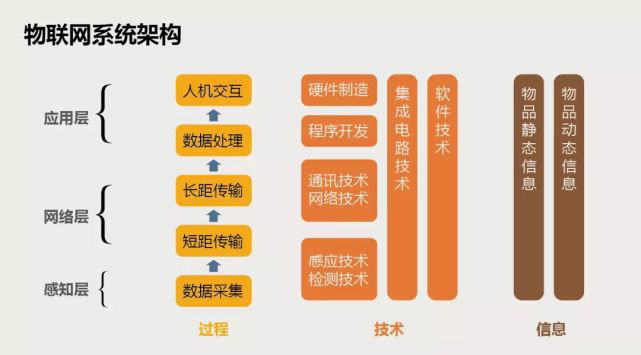
IoT is a network that connects any object to
the Internet for information exchange and communication through sensing devices
such as QR code readers, radio frequency identification devices (“RFID”),
infrared sensors, global positioning systems and laser scanners. IoT enables
intelligent identification, positioning, tracking, monitoring and management of
the connected objects. IoT platforms is also a market place of transaction data,
logistics services and inventory services. It connects the capital needs with resources
providers, and fully bridge between modern logistics and information systems, making
it possible to share authentic transaction data and information across entire industry
chains.
The application of IoT technologies in the
supply chain finance sector has improved transaction transparency for all the parties
involved in the supply chain finance market. This is achieved mainly through a
number of technologies, including sensing, navigation and location technologies
to digitalize and visualize the processes of storage and freight. This makes it
easier to control and manage the dynamic transaction process, check the
authenticity of transactions, and even send out early warning once abnormal
situations are detected, improving the operational efficiency in the supply
chain finance sector greatly, and enhancing risk control effectively. In
addition to visual tracking, IoT platforms can also help financial institutions
with credit investigation, speed up loan approval, improve post-loan management
efficiency, monitor the status of pledges, and carry out dynamic management.
As the "Internet of Everything" has
become an important future for global networks, SYIT will continue to cement
its strengths in the industrial IoT market, explore innovative business models
with the application of key technologies, and capture new strategic
opportunities for industrial technology development.